
Why family gardening works
- Fast rewards keep kids engaged (microgreens, pea shoots, baby leaves).
- Cut-and-come-again harvesting turns one sowing into weeks of kai.
- Small-space friendly: containers, rails, and tight courtyards.
- Life skills: observing seasons, measuring water, sharing chores.
Family Garden Plans
Secondary keyword focus: family garden plans appears in section titles, captions, and internal anchors for SEO.
Plan A — 1 m² "Kid-Proof Salad Bed" (Beginner Family Garden Plan)
- Goal: Daily snips for lunchboxes; minimal fuss.
- Layout (6 strips): Lettuce • Rocket • Mizuna/Tatsoi • Spinach (swap to NZ spinach in summer) • Pea-shoot tray at front • Rotation strip for re-sowing.
- Soil recipe (per m²): 1 bucket compost + 1 mug balanced organic fertiliser forked in; top with 2–3 cm mulch (straw/leaf mould).
- Water: 2–3 cm/week; quick morning sprinkle in heat.
- Shade: 30–40% shade cloth in high summer prevents bitterness/bolting.
Succession loop (4 weeks):
- — W1: Sow lettuce/rocket/mizuna; start pea-shoot tray.
- — W2: Sow spinach or NZ spinach; start 2nd pea-shoot tray.
- — W3: First haircut (rocket/mizuna); start microgreens.
- — W4: Pick lettuce; re-sow rocket in rotation strip.
Plan B — Balcony/Small-Deck Family Garden Plan (Containers)
- Goal: Apartment-friendly family garden plan with quick harvests.
- Set-up:
- — 2× 30–40 cm troughs = loose-leaf lettuce (broadcast thinly; 5 mm cover)
- — 1× 30 cm pot = rocket (thin to 10–15 cm)
- — 1× 30 cm pot = mizuna/tatsoi (thin to 15 cm)
- — 2× seed trays = pea shoots (stagger 1 week)
- — 2× shallow trays = microgreens (stagger 3–4 days)
- Light: 4–6 hours is plenty for leaves; rotate weekly.
- Winter boost: clip-on LED at the windowsill.
- Kid jobs: misting boss (pea shoots/microgreens), harvest chef (scissors), label maker.
Plan C — 1.2 × 2.4 m (4×8 ft) Family Garden Plan (Fast + Snack Row)
- Bed map (≈30 cm rows):
- — 1) Lettuce (two colours)
- — 2) Rocket + mizuna interplanted
- — 3) Spinach → NZ spinach (seasonal swap)
- — 4) Snack row: sugar snap peas on a short trellis (cool) → bush beans (warm).
- Notes: Mulch all rows; net brassica/Asian greens; trellis on the north edge to avoid shade.
Plan D — "Windowsill to Lunchbox" Family Garden Plan (No Yard)
Two microgreen trays (sunflower + radish) staggered 3–4 days, one pea-shoot tray restarted fortnightly, and a 40 cm herb trough (chives/basil/parsley). Year-round cycle indoors.
Kid-Approved, Fast Crops (for Any Plan)
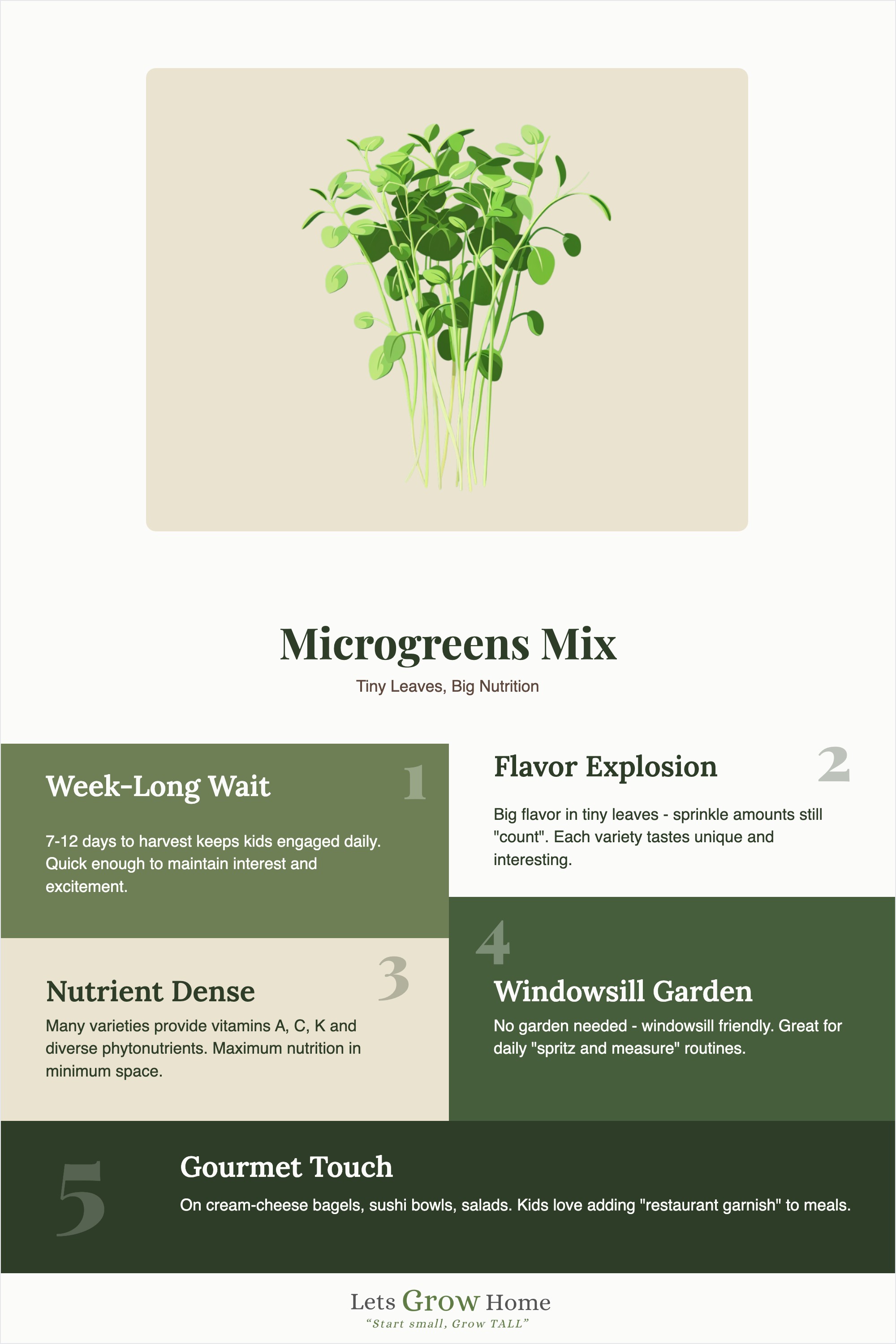
Microgreens (7–12 days)
Varieties: Sunflower, radish, broccoli, coriander
Why kids love them: These tiny powerhouses are like "baby vegetables" that kids can grow on the windowsill and harvest with scissors—instant gratification! The mild, crunchy sunflower shoots taste like nuts, while radish microgreens add a gentle spicy kick that's not overwhelming. Kids love watching the daily transformation from seed to sprout.
Nutritional magic: Contains up to 40x more nutrients than mature vegetables. Packed with vitamins C, E, and K, plus antioxidants that support growing bodies and immune systems.
Growing tip: Let kids mist them daily with a spray bottle—they'll feel like plant scientists watching their experiment succeed.
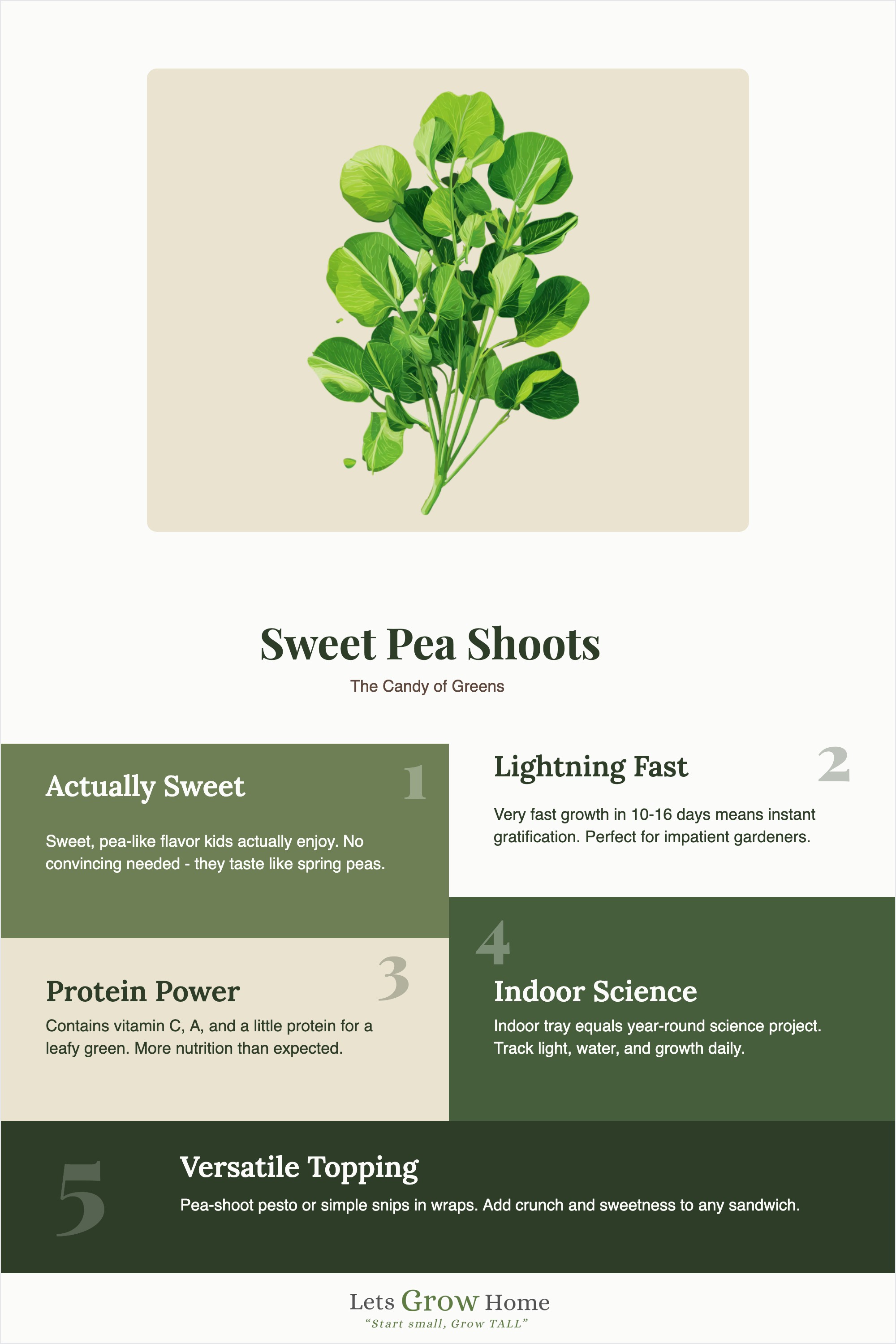
Pea Shoots (10–16 days)
Growing method: Use pantry peas in a 3–4 cm tray; snip at 10–12 cm; regrows once
Why kids love them: Sweet and crunchy like snap peas but ready in two weeks! They taste like spring and add a fun texture to sandwiches. Kids get excited about the "haircut and regrow" aspect—like giving their plants a trim and watching them bounce back.
Nutritional magic: High in protein, fiber, and vitamin C. Contains all essential amino acids—perfect for growing kids who might be picky about other protein sources.
Fun factor: Use them as "green confetti" on pizzas or let kids roll them into wraps for a satisfying crunch.
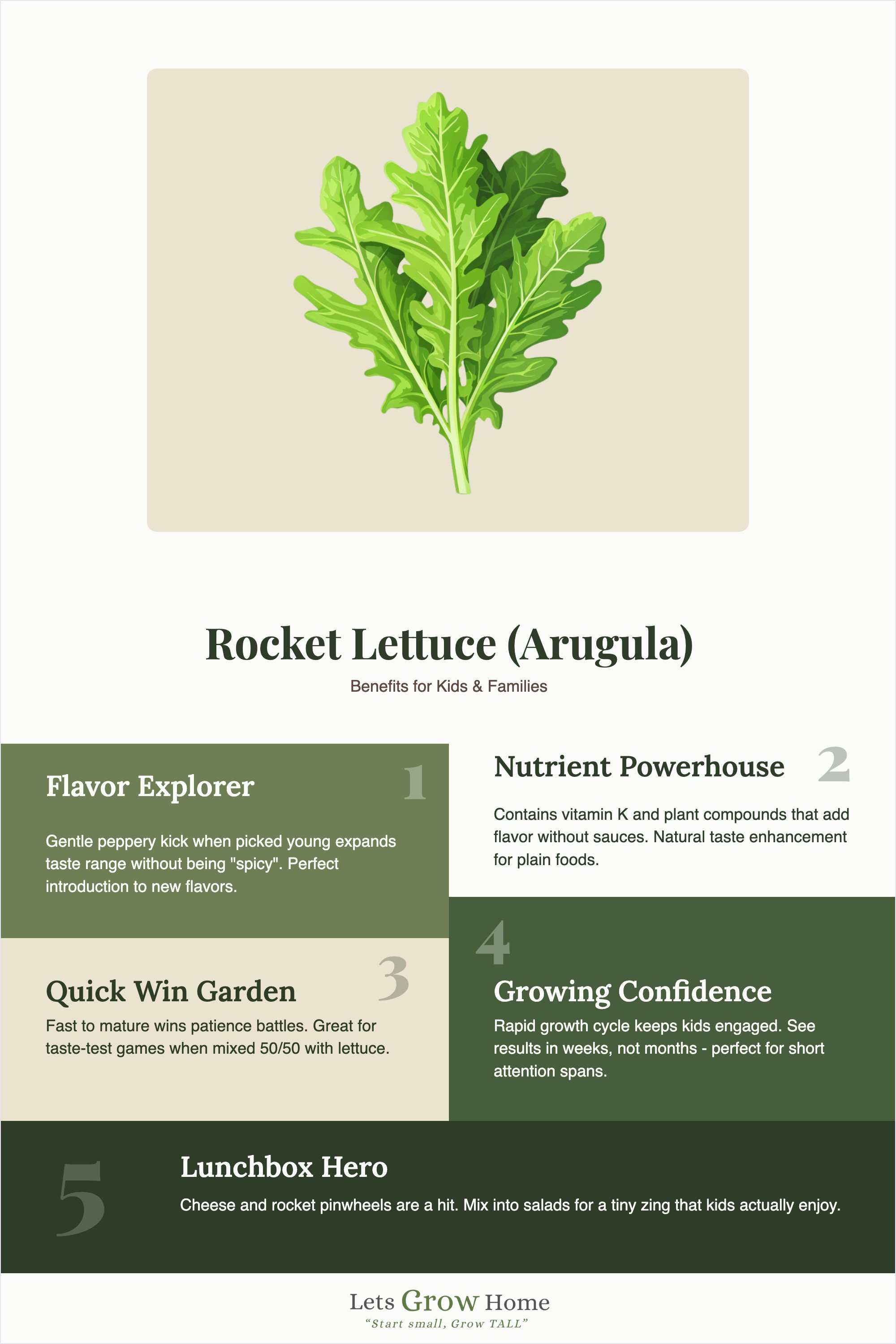
Rocket / Arugula (20–30 days)
Growing method: Sow little and often; pick young for mild flavour
Why kids love them: When harvested young (baby rocket), the leaves are mild and slightly nutty rather than peppery. The name "rocket" makes it exciting—who doesn't want to grow rocket leaves? The leaves look like little green flames, making salads more interesting.
Nutritional magic: Rich in calcium for growing bones, vitamin K for healing scraped knees, and folate for brain development. Natural nitrates boost energy for active kids.
Kid-friendly serving: Mix baby rocket with sweet fruits like strawberries or pears to balance flavors, or hide in pesto for pasta.
Asian Greens (21–30 days)
Varieties: Mizuna, tatsoi, pak choi—soft baby leaves
Why kids love them: These have fun shapes—mizuna's feathery leaves look like tiny green feathers, tatsoi grows in perfect rosettes like green flowers, and baby pak choi are like miniature vegetables from a fairy garden. Mild, sweet flavor when young with a satisfying crunch.
Nutritional magic: Loaded with vitamins A and C, calcium, and iron. Contains glucosinolates that support the body's natural detox processes.
Cooking adventure: Let kids help stir-fry with a touch of soy sauce, or eat raw in "rainbow rolls" with colorful vegetables.
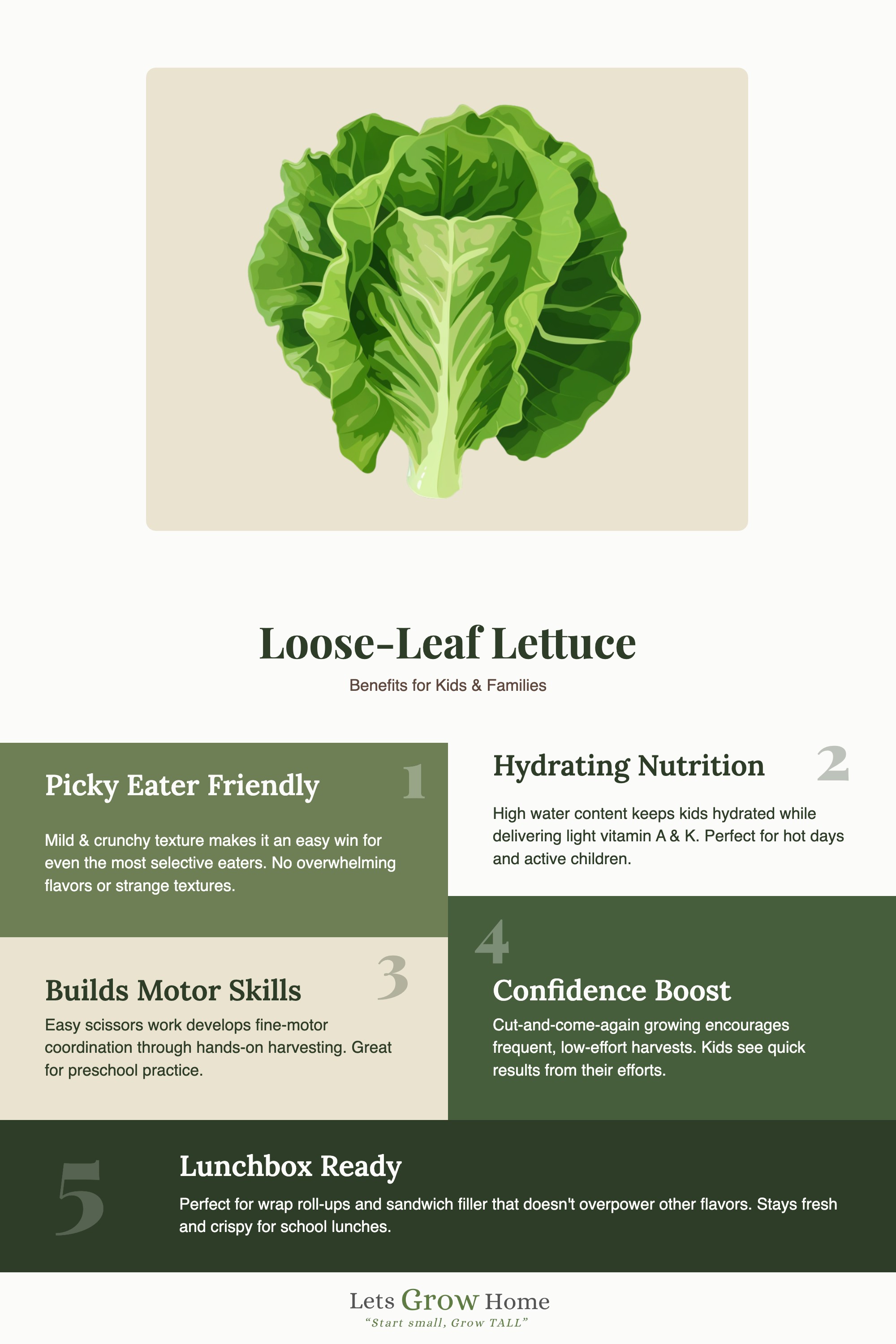
Loose-Leaf Lettuce (25–35 days)
Growing method: Broadcast sow, thin lightly, harvest outer leaves
Why kids love them: Comes in fun colors—red, green, speckled—like a rainbow garden! The soft, ruffled leaves are easy for small hands to pick, and the mild, sweet taste doesn't overwhelm young palates. Kids can "harvest and it keeps growing" which feels like magic.
Nutritional magic: High water content keeps kids hydrated, plus vitamins A and K. Red varieties contain anthocyanins that protect cells and support brain health.
Lunchbox hero: Perfect for "lettuce cups" filled with their favorite ingredients, or as the base for build-your-own taco nights.
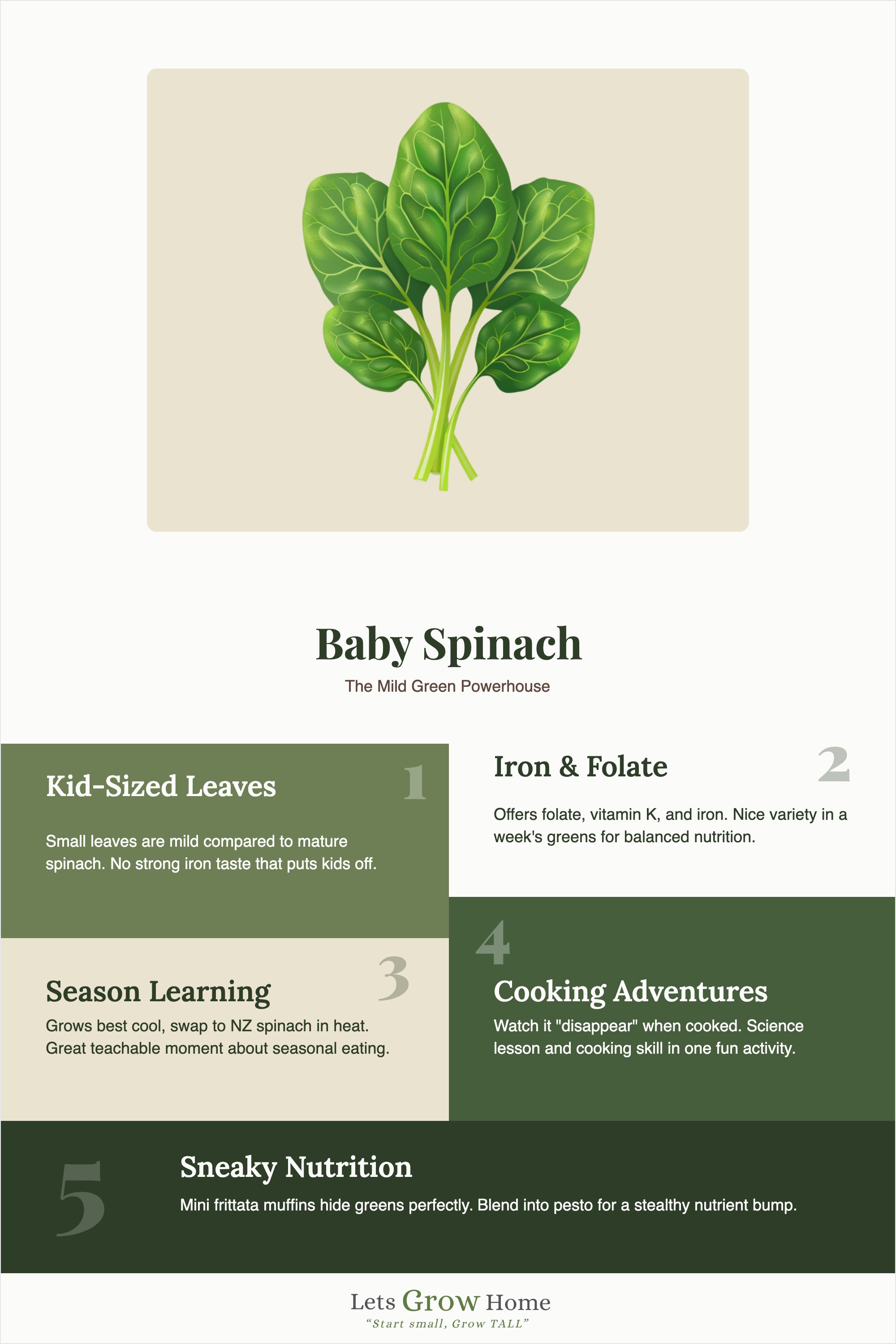
Baby Spinach & NZ Spinach (30–40 days)
Growing method: Partial shade in heat; use NZ spinach (Tetragonia) for summer
Why kids love them: Baby spinach is tender and mild—nothing like the strong, sometimes bitter mature spinach. NZ spinach has succulent, almost lemony leaves that stay crisp in summer heat. Both are "Popeye's power food" which makes eating them an adventure.
Nutritional magic: Iron for energy and concentration at school, folate for growing bodies, vitamin C to help absorb the iron. NZ spinach is also high in omega-3 fatty acids for brain development.
Sneaky serving tips: Blend into smoothies with berries (turns them green—"monster smoothies"!), wilt into pasta at the last minute, or add to homemade pizzas where they'll practically disappear.
Lunchbox pipeline
Same-morning pick → spin/dry → pack with hummus wraps, rocket-cheese pinwheels, cold noodle pots (tatsoi), mini spinach frittatas, pea-shoot pesto, microgreen sprinkles.
Planting & Spacing Quick-Ref
| Crop | Spacing | Depth | Days to Harvest | Harvest Style |
|---|---|---|---|---|
| Microgreens | tray-sown thick | surface/light cover | 7–12 | scissor cut |
| Pea shoots | shoulder-to-shoulder | 1–2 cm | 10–16 | scissor cut |
| Rocket | rows 15–20 cm; thin 10–15 cm | 5 mm | 20–30 | outer leaves |
| Mizuna/Tatsoi | rows 20 cm; thin 15 cm | 5–8 mm | 21–30 | baby leaves |
| Lettuce (loose-leaf) | broadcast; thin 10–15 cm | 5 mm | 25–35 | outer leaves |
| Spinach (baby) | rows 25 cm; thin 10 cm | 1 cm | 30–40 | baby leaves |
| NZ spinach | 30–45 cm | 1 cm | 40–55 (ongoing) | tip pruning |
Soil, Water, Shade (Keep It Simple)
- Peat-free compost + organic fertiliser → fork into top 15–20 cm.
- Mulch (straw/leaf mould) keeps soil cool and moisture steady.
- Water mornings; aim for 2–3 cm/week; containers dry faster—finger test first.
- Shade cloth (30–40%) in high summer = fewer bitter leaves and less bolting.
Pest & Problem Solver
- Holes in leaves: fine netting for white butterfly; early slug/snail patrol; copper tape on pots.
- Bitter/bolting: harvest younger, add shade, water evenly, succession sow small patches.
- Leggy indoor trays: more light, rotate daily, bottom-water, sow a touch thinner.
- Slow growth: light compost tea or seaweed feed every 10–14 days.
Weekly Family Gardening Routine (By Age)
| Task | 3–5 yrs | 6–8 yrs | 9–12 yrs |
|---|---|---|---|
| Fill trays & labels | ✓ (helped) | ✓ | ✓ |
| Sowing & thinning | – | ✓ (guided) | ✓ |
| Watering & misting | ✓ | ✓ | ✓ (schedule lead) |
| Netting & slug patrol | – | ✓ (with adult) | ✓ |
| Harvest & packing | ✓ | ✓ | ✓ (prep pesto/frittatas) |
Seasonal Timing in Aotearoa (Glance)
- North Island warm zones: sow leaves most of the year; rely on microgreens/pea shoots mid-winter.
- Cooler South Island: microgreens/pea shoots through winter; sprint with lettuce/rocket/mizuna as soils warm.
- Following maramataka? Choose favourable sowing days and observe what thrives on your whenua.
Budget Set-Up List
Seeds (lettuce, rocket, mizuna/tatsoi, spinach, pantry peas, microgreens) • 20–30 cm containers or a 1 m² bed • peat-free compost • balanced organic fertiliser • mulch • fine netting • shade cloth (30–40%) • clip-on LED (optional) • blunt-tip scissors & labels.
Family Gardening FAQs
Q: What is the simplest family gardening plan to start with?
A: Copy the 1 m² Kid-Proof Salad Bed above—clear layout, fast crops, and a 4-week succession loop.
Q: Can a family garden plan work on a balcony?
A: Yes—see the Balcony/Small-Deck Family Garden Plan (troughs, pots, pea shoots, microgreens). 4–6 hours of light is enough for leaves.
Q: What can kids harvest within two weeks?
A: Microgreens (7–12 days) and pea shoots (10–16 days). Then rocket/mizuna in ~3–4 weeks.
Q: How do we stop greens turning bitter?
A: Harvest younger, water mornings, and add 30–40% shade cloth in heat. Keep re-sowing small patches to stay ahead of bolting.
Q: Is NZ spinach better for summer family gardening?
A: Yes—Tetragonia loves heat and stays tender when true spinach struggles.